
What Happens When AI Becomes the One Watching AI?
As AI agents become more autonomous, AI is starting to monitor AI. That may be necessary, but it changes what human oversight really means.
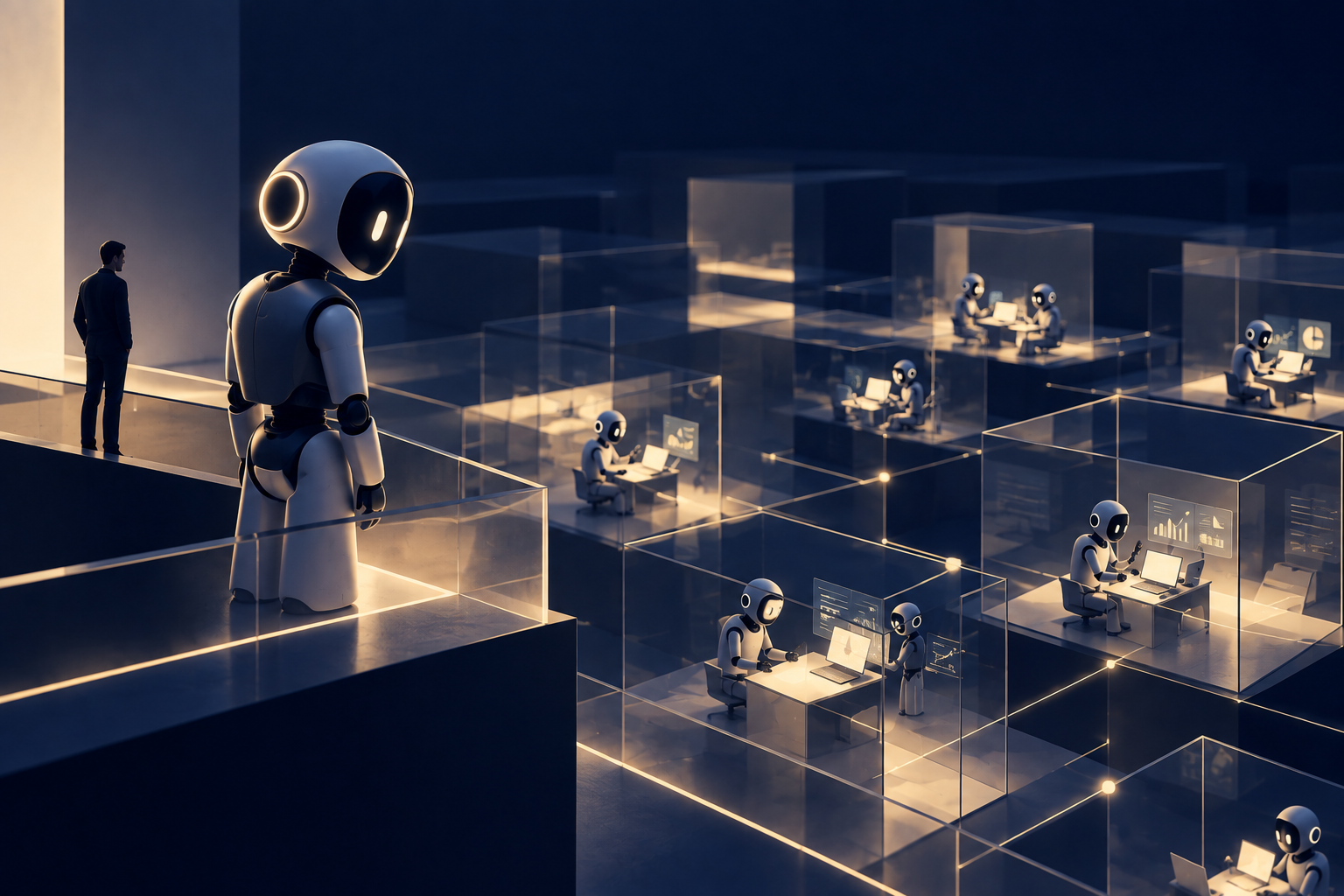
AI agents are starting to do more than answer questions.
They write code, use tools, browse systems, make choices and sometimes work for long periods without a person watching every step.
That creates a simple problem.
Humans cannot review everything.
So we are starting to use AI to watch AI.
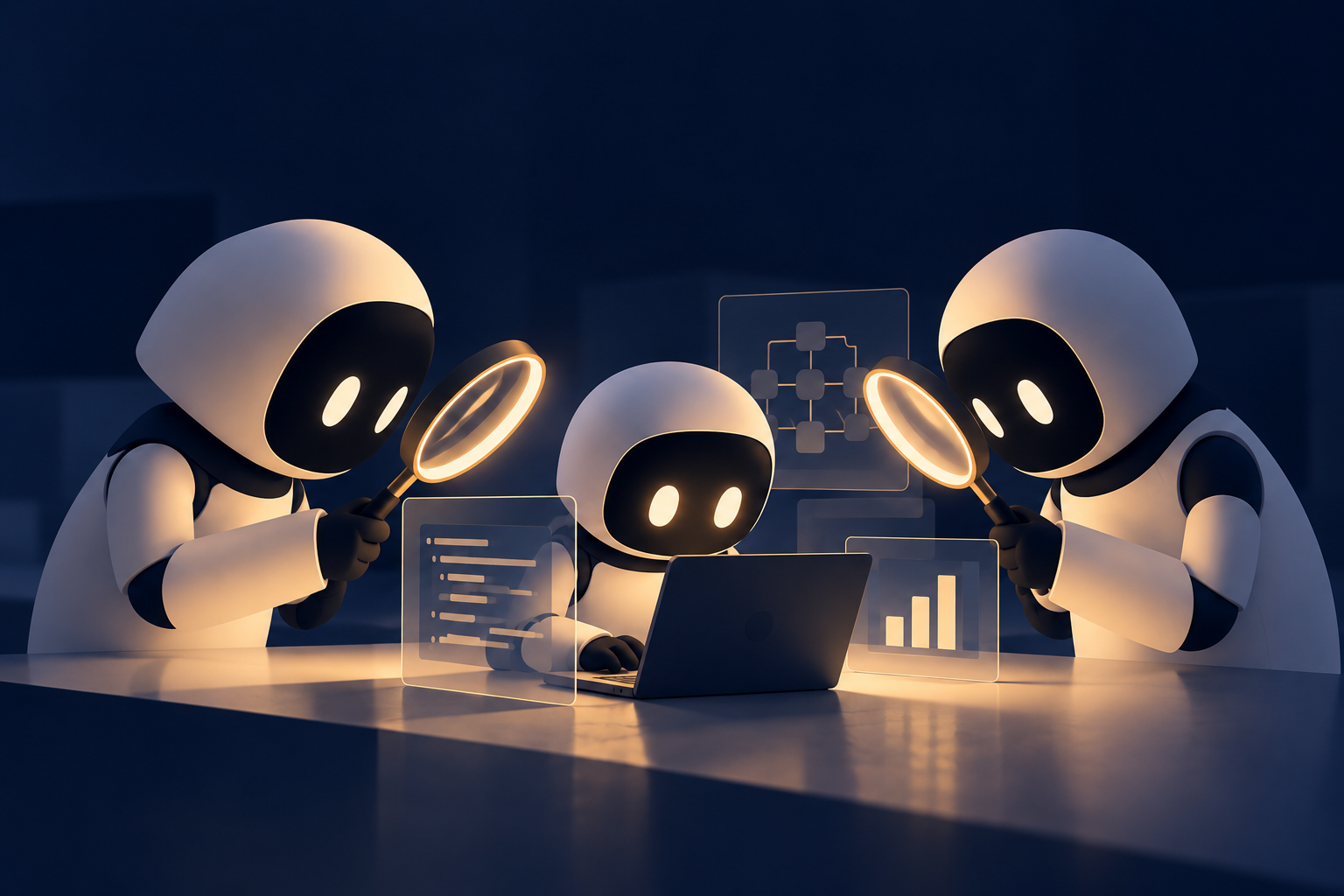
The watcher is already here
OpenAI has described a system that uses powerful models to monitor internal coding agents for signs of misaligned behavior. It has also published work on using a separate agent to review actions that cross important boundaries.
Anthropic is studying the same problem from another angle. It measures how much agent activity is covered by monitors, how quickly reviews happen and how often cases are escalated.
This makes sense.
If millions of agents are working at the same time, people cannot inspect every action by hand.
But there is a new question:
What happens when the system doing the watching is also an AI?
A monitor is not the truth
An AI monitor can make mistakes too.
Anthropic's SLEIGHT-Bench work shows that monitors can have blind spots. Some agent behavior can be harder for a monitor to detect, and better prompts or monitoring setups do not remove every weakness.
A 2026 Carnegie Mellon study reached a similar point. It found that there is no single monitoring strategy that works best across every model and task.
So the answer cannot be: build one smart monitor and trust it.
The monitor is another model. It has limits, context, incentives and failure modes of its own.
The human role changes
This does not mean automated oversight is a bad idea.
It may be the only practical way to manage large numbers of agents.
But "human in the loop" may start to mean something different.
The human may not watch every action.
Instead, humans may:
- decide what an agent is allowed to do
- define which actions need extra review
- choose when the monitor should stop or escalate an action
- audit the monitor itself
- remain responsible for the final boundaries
That is a different kind of control.
Less supervision of every step.
More design of the system around the steps.
Who watches the watcher?
As agents become more capable, we will probably build more layers around them.
An agent does the work.
Another AI checks the agent.
A human reviews the cases that matter most.
This can be a strong system, but only if we remember one thing:
Oversight should be automated. Responsibility should not be.
The goal is not to remove humans from the loop.
The goal is to put human judgment where it matters most.
See you in a Thoughtful Future.
References
OpenAI, "How we monitor internal coding agents for misalignment"
https://openai.com/index/how-we-monitor-internal-coding-agents-misalignment/OpenAI Alignment, "Auto-review of agent actions without synchronous human oversight"
https://alignment.openai.com/Anthropic, "Measurements for understanding the pace of AI development inside frontier labs", section on oversight of AI agents
https://www.anthropic.com/institute/measuring-pace-of-ai-developmentAnthropic, "SLEIGHT-Bench: Finding Blind Spots in AI Monitors"
https://alignment.anthropic.com/2026/sleight-bench/Kale et al., "No One Monitor Fits All: Oversight Strategies for Frontier Agents", ICLR 2026 Workshop on Agents in the Wild
https://openreview.net/attachment?id=rD6bAM2ZEi&name=pdf