
AI Solved the Problem. Humans Are Still Catching Up.
AI can produce useful answers faster than people can understand them. How do we keep understanding debt from growing?
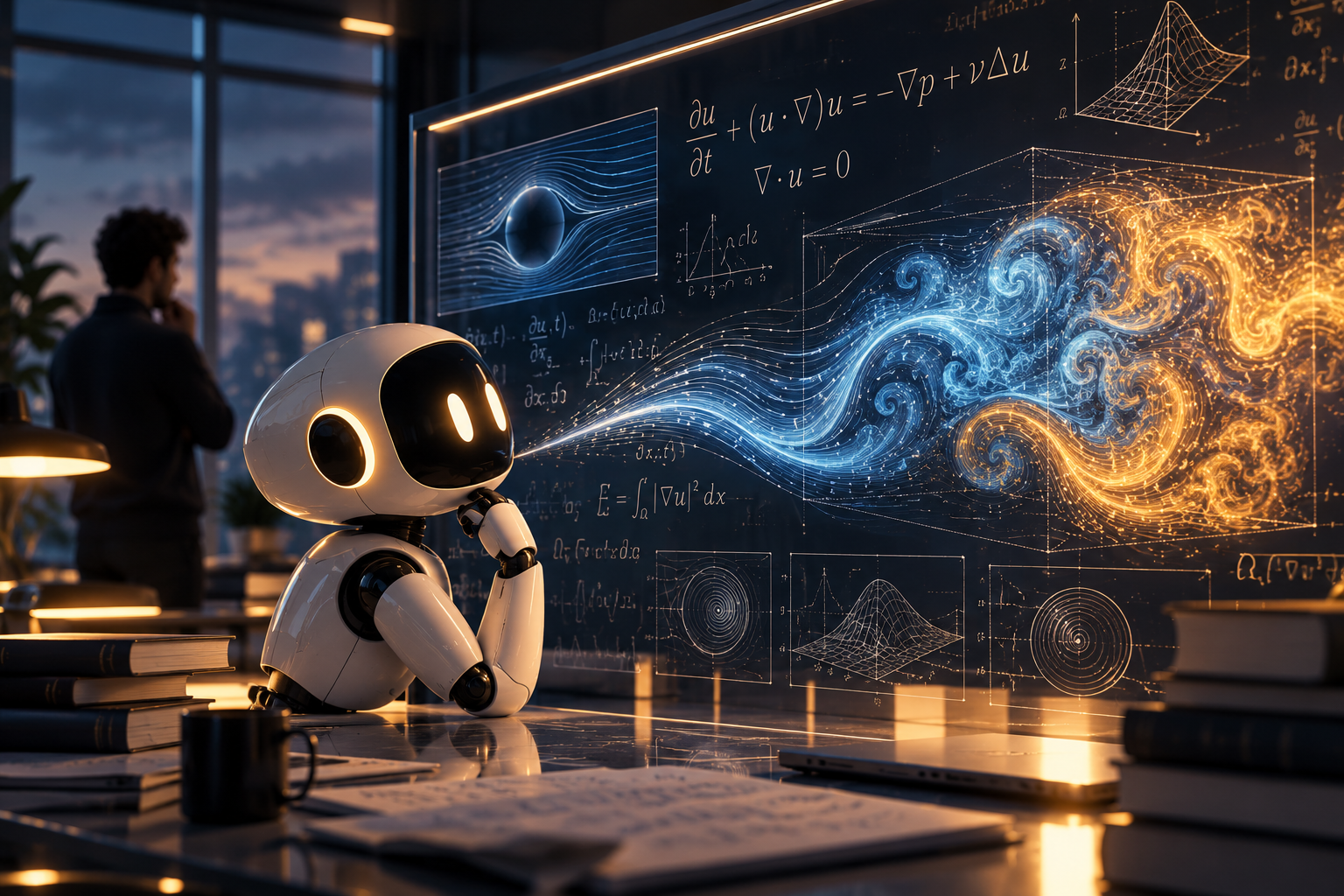
An OpenAI system helped solve one of the hardest open problems in mathematics: the Navier-Stokes problem.
Navier-Stokes equations describe how fluids move, things like water, air and turbulence. We have used these equations for more than a century, but one basic question has remained open for around 90 years: can a smooth 3D flow suddenly break down and become mathematically singular?
OpenAI says an internal system, using around 10,000 coordinating AI agents, produced a proof showing that this can happen. The company also published a formal version of the proof in Lean, a system used to verify mathematics. The result is still being examined by mathematicians.
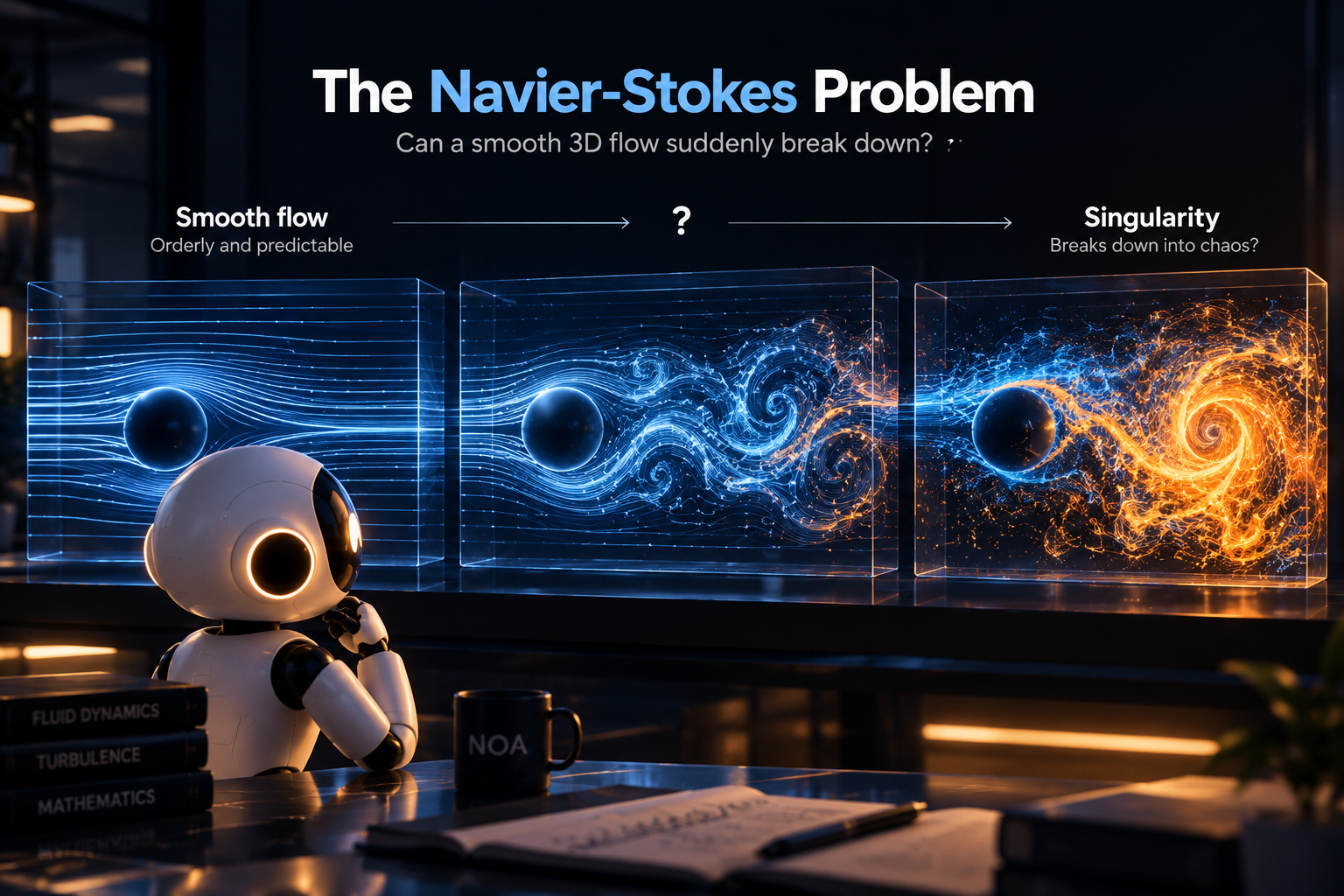
That is impressive on its own. But I think the more interesting part is what happens next: humans now have an answer that may take a long time to fully understand.
We already see smaller versions of the same thing at work. AI writes code that runs, finds patterns in data, recommends a strategy or suggests a change that improves performance. If the result works, it is tempting to accept it and move on.
Imagine an AI recommends changing your pricing. Revenue goes up by 10%. Great result. But nobody on the team really understands why it worked. Then the market changes. Do you know which part of the recommendation still makes sense? Can you adapt it? Can you explain why the next recommendation should be trusted?
Maybe not. You got the answer, but you did not necessarily get the knowledge.
I think this creates a new kind of debt: understanding debt.
We already know technical debt. We move fast, take shortcuts and promise ourselves we will clean things up later. Understanding debt is similar. We keep accepting useful AI outputs faster than we build the knowledge needed to explain them.
At first, that can feel great. The code works. The forecast is accurate. The campaign performs better. The analysis looks right. The problem appears later, when something changes or something goes wrong.
This does not mean every AI output needs a long investigation. If AI helps rewrite an email or organize meeting notes, "good enough" may really be good enough. But for decisions that affect money, customers, products, science or people, I think we need a higher bar.
Three simple questions can help: Can we verify it? Can we explain it? Can we trace it?
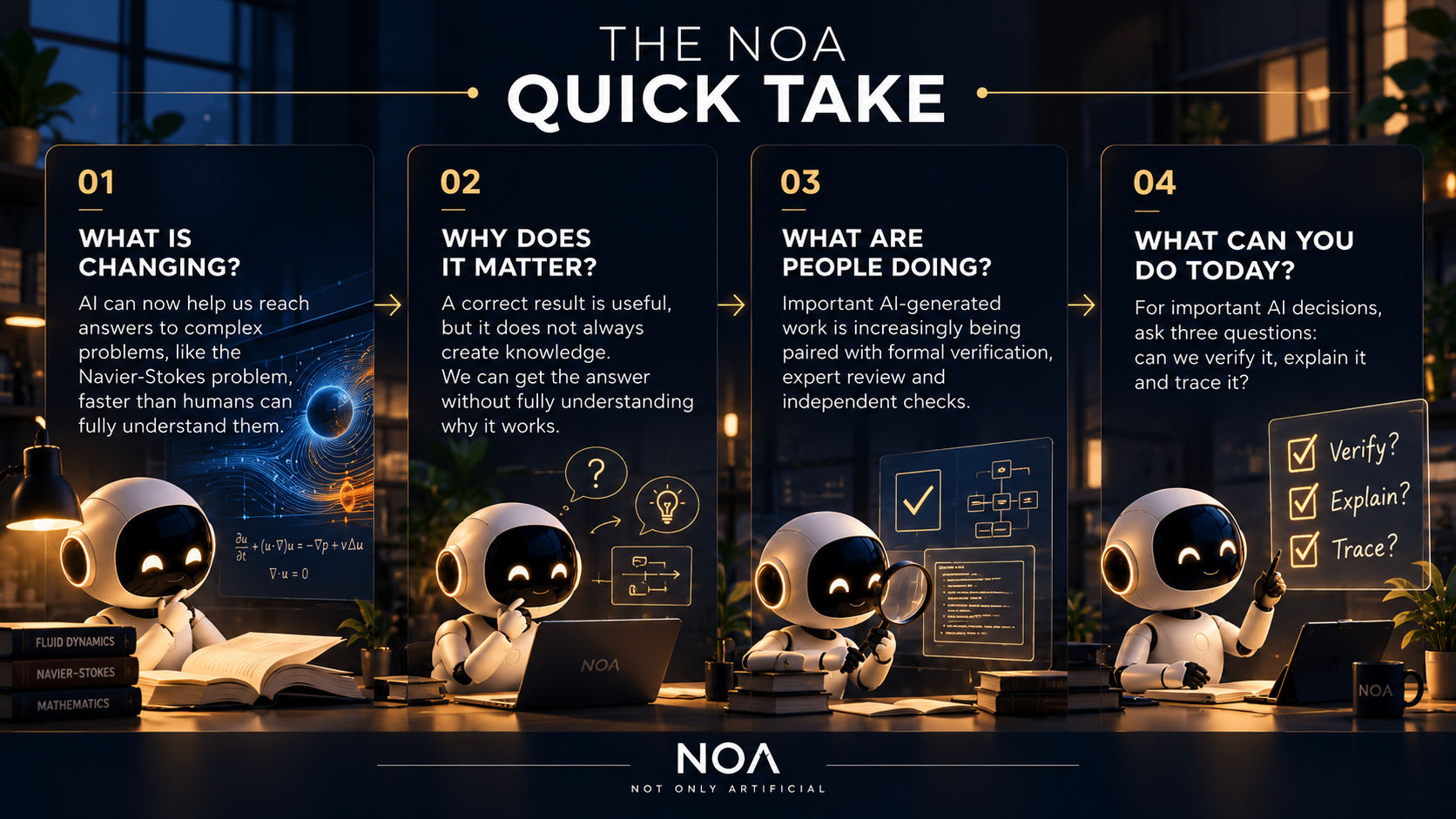
OpenAI's Navier-Stokes result shows how powerful this new world can be. AI may help us solve problems that humans have struggled with for decades. But it also gives us a preview of something we will see much more often.
The answer may arrive before the understanding.
The challenge will not be slowing AI down. It will be making sure our understanding does not fall too far behind.
See you in a Thoughtful Future.
References
OpenAI, On the Navier-Stokes Millennium Prize Problem
https://openai.com/index/navier-stokes-solution/WIRED, Solving Math's Greatest Problems Was an Art Form. Then Came AI
https://www.wired.com/story/solving-maths-greatest-problems-was-an-art-form-until-ai/